ECHOcommunity Actualizaciones
.png?w=600)
Upcoming Events for Asia! 2026-01-13
ECHO Asia is excited about upcoming training in 2026. Join us on the ECHO Asia farm this year!
- Solar Dryer Workshop – January 16
- Asian National Apprenticeship Program, Cohort 1 Start Date – February 2
- Intro to Tropical Agriculture & Development (TAD) Course: February 2–7
- Kitchen Gardening Workshop: February 19–20
For registration and more information about any of these events, contact us directly at echoasia@echocommunity.org.
What is causing this damage? 2026-01-06
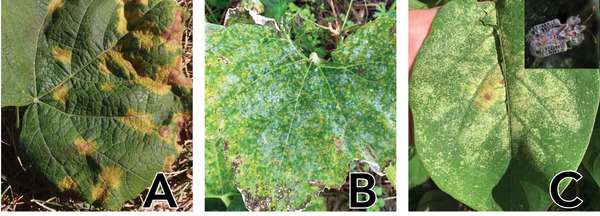
Noticing damage to the leaves or fruit of your crops can be alarming. For certain plant diseases, early detection is essential for effective management that limits further injury to the crop. In other cases, the level of damage—or the type of pest responsible—may be too minor to justify control measures, as the cost of intervention could exceed the impact of the damage. Identifying the exact cause of leaf injury can be challenging, because insects, pathogens, nutrient deficiencies, and environmental factors can produce similar symptoms. To assist with this process, ECHO has developed a set of example photographs that illustrate common leaf symptoms and provide guidance on how to determine the likely cause of the damage. Take a look!
ECHO quick photo guide of insect pest damage vs. other crop damage

TOT with Global CHE Network 2025-12-23
Join us in February for a Trainer of Trainers course with Global CHE Network at ECHO North America!
This training offers instruction on proven community development, including principals/practices and practical techniques, systems and technologies to meet wholistic community development, agricultural, and nutritional needs of impoverished communities.
Training Dates: February 23-27, 2026
For more information about this course and to register use the link below.
EDN Número 172 Disponible Ahora 2025-12-16
Temas de Relieve
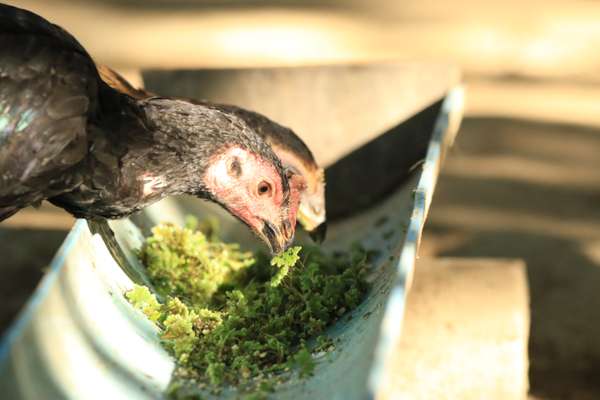
- Producción de plantas acuáticas: el helecho de agua y la lenteja de agua para alimento del ganado
- Biocarbón impregnado con sales como desecante
- Ecos de nuestra red: Girasol: Recomendaciones Económicas Sostenibles
- Del Banco de Semillas de ECHO: El espinaca Malabar, Una verdura tropical de hojas verdes
- Libros, Sitios Web y Otros Recursos: ANAFAE resources
Producción de plantas acuáticas
el helecho de agua y la lenteja de agua para alimento del ganado
Shaun Snoxell y Nitin Rex Sancho
Extracto:
ECHO Asia midió el aumento de peso de la lenteja de agua y el helecho de agua por semana bajo manejo convencional en noviembre de 2025. Por cada gramo de lenteja de agua agregado a un contenedor, se cosecharon 4.5 gramos después de 7 días (tiempo de duplicación en 3.23 días). Por cada gramo de helecho de agua agregado, se cosecharon 3 gramos después de 7 días (tiempo de duplicación en 4.42 días). Sin embargo, una vez que la superficie del agua está cubierta, o la fertilización se retrasa, la tasa de crecimiento disminuyó con rapidez.
Creation of bioliquid fertilizer in Central Africa 2025-12-09
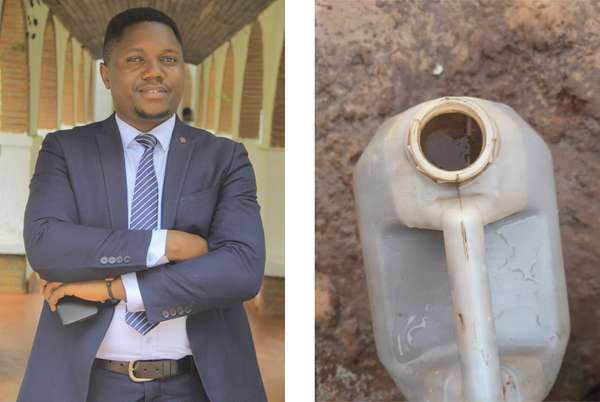
I am Kasereka Kaghesi Richard, originally from the East of the DRC, Nord-Kivu Province, in the city of Butembo, coordinator of the organization POID-RDC (People Organizing Initiatives for Development). We express our sincere gratitude to ECHO, the trainer Hassan Djebro, the facilitator Mwalimu, and all the other trainers who continue to support us and strengthen our capacities through the webinar series ECHO is conducting for Central Africa.
Despite the material challenges, we are moving forward with determination. The training received has allowed us to transform simple local resources into a useful product for our communities. This proves that, even without significant resources, innovation and willpower can produce tangible results. We firmly believe that this work is a seed for a better future. With the experimentation of our biofertilizer, we are taking a new step towards agricultural empowerment and the sustainable development of our communities.
Thanks to the training received from ECHO, we followed the following steps:
- We took a 20-liter bucket.
- We started by adding manure, fresh herbs, two shovelfuls of soil, then ash, and water.
- We also added some animal bones and feathers.
- The mixture was kept in a shaded area.
- Every morning and every evening, we used a tree stick as a stirrer to mix the preparation.
This is the simple and effective procedure we applied to obtain our biofertilizer.
We will now move on to the utilization phase to experiment with our product directly in the field and observe its positive effects on our crops.
¡Comparte tu experiencia con estas innovaciones! 2025-12-02
ECHO se encuentra recabando retroalimentación sobre cuatro de las numerosas innovaciones agrícolas compartidas en nuestra red global:
- Nutrición basada en cultivos perennes - utilización de cultivos perennes como la chaya y la moringa para fortalecer la nutrición humana;
- Sellado al vacío con bomba de bicicleta para almacenamiento de semillas;
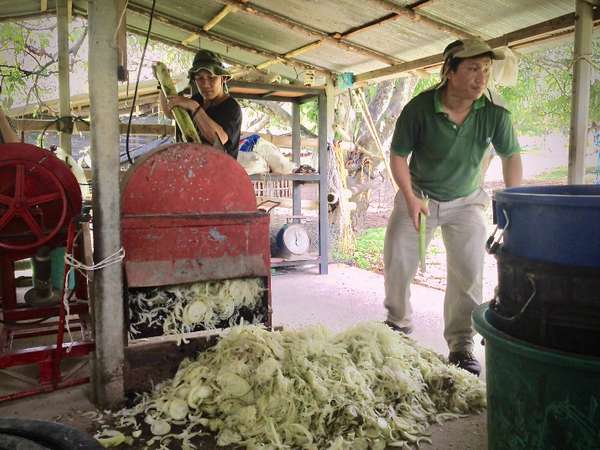
- Ensilaje con tallos de banano para alimento del ganado; y
- Biocarbón para mejoramiento del suelo y secuestro de carbono.
Los aportes o comentarios que ustedes nos den nos ayudarán a comprender cómo estas innovaciones se han utilizado, adaptado y compartido en su contexto. Para ello hemos diseñado una encuesta que tomará alrededor de 5 minutos para responderla por tema. Sus respuestas se integrarán a las capacitaciones, las investigaciones y el apoyo que realiza la red de ECHO. También contribuirán a la investigación dirigida a comprender cómo las innovaciones agrícolas se difunden y aplican en distintos contextos. Su participación en esta encuesta es totalmente voluntaria.
Gracias por compartir su experiencia y por su aporte a este esfuerzo de aprendizaje colaborativo.
January Trainings ECHO North America 2025-11-25
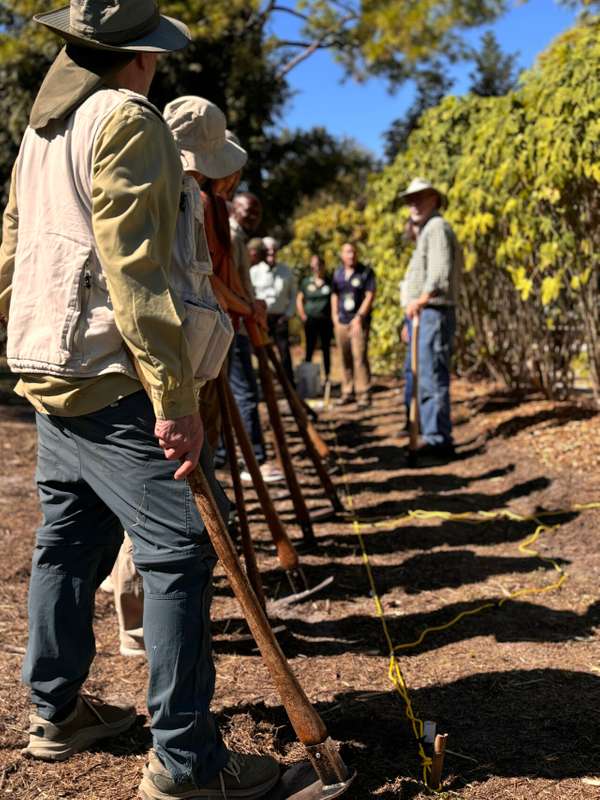
Join us in January for two training opportunities at ECHO North America!
January 20-24 Farming God's Way: an amazing solution to the food security and poverty crisis facing agricultural communities, using well-integrated biblical, management and technical keys to help break the yokes of physical and spiritual poverty among the poor.
January 26-30 for Introduction to Tropical Agriculture Development: This course covers a broad range of topics relevant to those starting in agricultural development in a tropical environment.
You can register for both trainings and save $$!
Click the links above to learn more about each training and to register. Early bird tickets end December 1st, Register TODAY!
National Seed Bank Managers Forum - Dodoma, Tanzania 2025-11-04
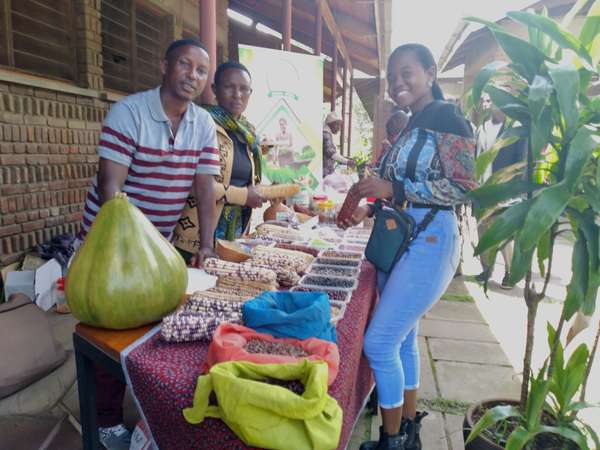
November 21 - 22, 2025 | Royal Village Hotel, Dodoma
This 2-day event aims to bring together community seed bank managers in Tanzania (farmers operating in community seed banks), partner organizations, and other relevant stakeholders to exchange experiences, consolidate initiatives related to community seed banks, and co-create tools and resources for improved seed bank management.
Email ECHO East Africa Seed Bank Manager, Faith Juma, with questions: easeeds@echocommunity.org
Integrated Pest Management 2025-10-28
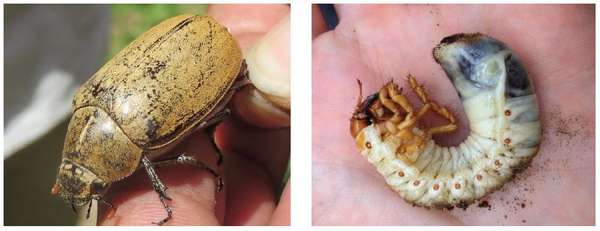
Pest control is a crucial part of farmer management of agroecosystems. The current global situation calls for a multi-pronged approach to pest management. To be widely applicable, this approach must provide farmers with options to control pests at various scales of production (from small farms to very large operations) with a diversity of resources. Integrated pest management, a strategy based on farmer innovations, is highly adaptable to specific contexts and reduces dependency on pesticides while still recognizing their use.
If you have other approaches to pest management that have worked for you in your context, please share them with the global ECHO Network on ECHO Conversations!
Example of IPM from the Island of Bali
View a quick photo guide of insect pest damage vs. other crop damage
Read IPM Technical Note Online
.jpg?w=600)
The importance of food preservation 2025-10-21
ECHO actively promotes, researches, and shares pathways and options for food preservation. Food preservation is a vital way to reduce postharvest losses, maximize profitability, retain or improve nutrient density of food commodities, and economically diversify within local food systems. ECHO West Africa has, for example, promoted and trained about creating tomato paste in areas where prices plummet as supply increases and farmers get less return on investment without this form of value-addition and preservation. ECHO East Africa has co-created drier designs for drying fruits and vegetables even in humid contexts.
Learn more about direct solar driers