Mises à jour de ECHOcommunity

TOT with Global CHE Network 2025-12-23
Join us in February for a Trainer of Trainers course with Global CHE Network at ECHO North America!
This training offers instruction on proven community development, including principals/practices and practical techniques, systems and technologies to meet wholistic community development, agricultural, and nutritional needs of impoverished communities.
Training Dates: February 23-27, 2026
For more information about this course and to register use the link below.
Now Available! EDN 172 2025-12-16
In this issue
- Aquatic Plant Production: Azolla and Duckweed for Livestock Feed
- Salt-impregnated Biochar as a Desiccant
- Echoes from Our Network: Sunflower, Sustainable Economic Recommendations for East Africa
- From ECHO's Seed Bank: Malabar Spinach, A Tropical Green Leafy Vegetable
- Books, Websites, and Other Resources: ANAFAE resources
Aquatic Plant Production
Azolla and Duckweed for Livestock Feed
Shaun Snoxell and Nitin Rex Sancho
Excerpt:
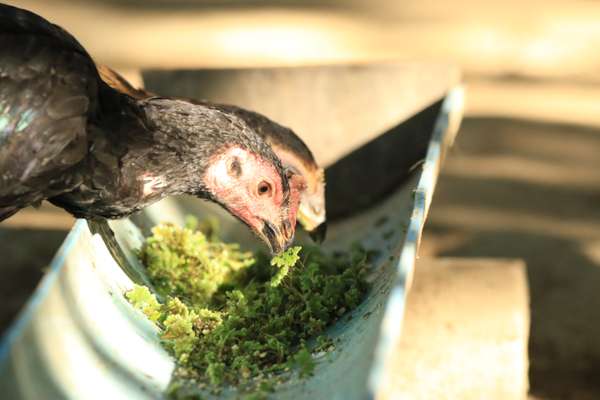
At ECHO Asia, we feed both duckweed and azolla to chickens. We scoop plants out of the water using a plastic basket, and feed fresh plants directly to the chickens. We do not dry the plants before feeding. Chickens tend to find the azolla more palatable than the duckweed. However, in our context, duckweed tends to grow faster than azolla. Harvest and feeding takes just a few minutes. ECHO Asia measured the increase in weight of duckweed and azolla per week under conventional management in November 2025. For each gram of duckweed added to a container, 4.5 grams were harvested after 7 days (doubling time in 3.23 days). For every gram of azolla added, 3 grams were harvested after 7 days (doubling time in 4.42 days). However, once the surface of the water is covered, or fertilization is delayed, the growth rate declined rapidly.
La création d'engrais bioliquides en Afrique centrale 2025-12-09
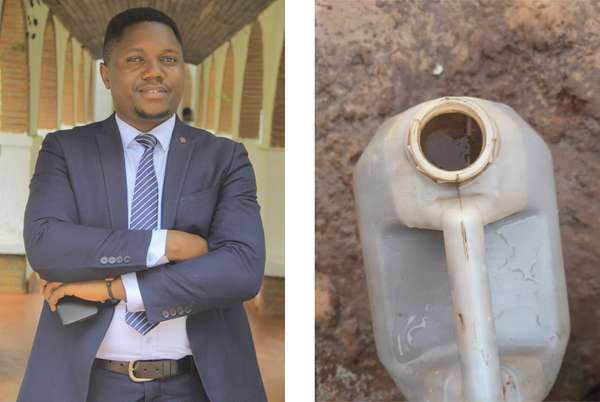
Je suis Kasereka Kaghesi Richard, originaire de l'Est de la RDC, dans la ville de Butembo, et le coordonnateur de l'organisation POID-RDC (Personnes Organisant des Initiatives pour le Développement).Nous exprimons notre sincère gratitude à ECHO, au formateur Hassan Djebro, au facilitateur Mwalimu, ainsi qu'à tous les **autres formateurs** qui continuent de nous soutenir et de renforcer nos capacités.
Malgré les défis matériels, nous avançons avec détermination. La formation reçue nous a permis de transformer de simples ressources locales en un produit utile pour nos communautés. Cela prouve que, même sans ressources importantes, l'innovation et la volonté peuvent produire des résultats tangibles.
Procédure de Production de Notre Biofertilisant
Grâce à la formation reçue de l'organisation ECHO, nous avons suivi les étapes ci-dessous :
- Nous avons pris un seau de 20 litres.
- Nous avons commencé par ajouter du fumier, des herbes fraîches, deux pelletées de terre, puis de la cendre et de l'eau.
- Nous avons également ajouté des os et des plumes d'animaux.
- Le mélange a été conservé dans un endroit ombragé.
- Chaque matin et chaque soir, nous avons utilisé un bâton d'arbre comme agitateur pour mélanger la préparation.
Ceci est la procédure simple et efficace que nous avons appliquée pour obtenir notre biofertilisant. Nous allons maintenant passer à la phase d'utilisation pour expérimenter notre produit directement sur le terrain et observer ses effets positifs sur nos cultures.
Nous croyons fermement que ce travail est une graine pour un avenir meilleur. Avec l'expérimentation de notre biofertilisant, nous franchissons une nouvelle étape vers l'autonomisation agricole et le développement durable de nos communautés.
Partagez votre expérience avec ces innovations ! 2025-12-02
ECHO recueille des retours sur quatre des nombreuses innovations agricoles partagées au sein de notre réseau mondial :
- Nutrition pérenne – utiliser des cultures pérennes telles que le chaya et le moringa pour améliorer la nutrition humaine ;
- Scellage sous vide avec pompe à vélo pour le stockage des graines
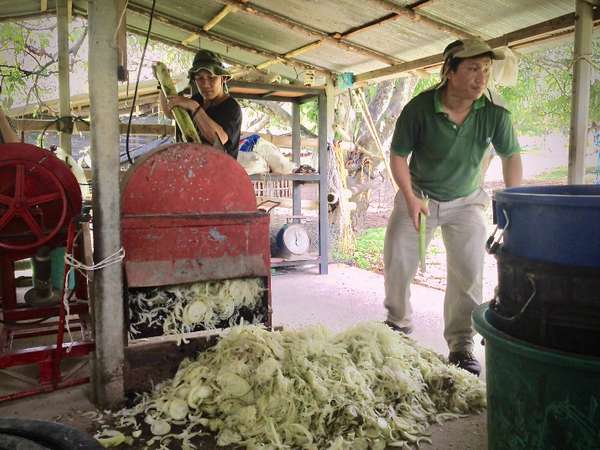
- Ensilage de tiges de banane pour l'alimentation du bétail ; et
- Biochar pour l'amélioration des sols et la séquestration du carbone.
Votre contribution nous aidera à comprendre comment ces innovations ont été utilisées, adaptées et partagées dans votre contexte. Le questionnaire devrait prendre environ 5 minutes par sujet pour être complété. Vos réponses seront utilisées pour guider les futures formations, recherches et soutiens au sein du réseau de ECHO. Votre réponse pourra également contribuer à des recherches visant à comprendre comment les innovations agricoles se diffusent et sont appliquées dans divers environnements. Vous pouvez refuser de participer ou quitter le sondage à tout moment sans pénalité.
Merci de partager votre expérience et de contribuer à cet effort d'apprentissage collaboratif.
January Trainings ECHO North America 2025-11-25
Join us in January for two training opportunities at ECHO North America!
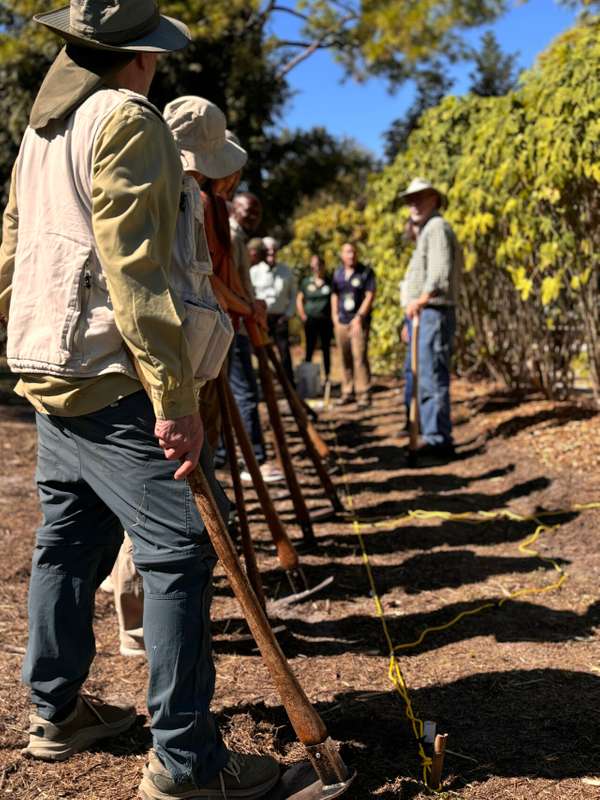
January 20-24 Farming God's Way: an amazing solution to the food security and poverty crisis facing agricultural communities, using well-integrated biblical, management and technical keys to help break the yokes of physical and spiritual poverty among the poor.
January 26-30 for Introduction to Tropical Agriculture Development: This course covers a broad range of topics relevant to those starting in agricultural development in a tropical environment.
You can register for both trainings and save $$!
Click the links above to learn more about each training and to register. Early bird tickets end December 1st, Register TODAY!
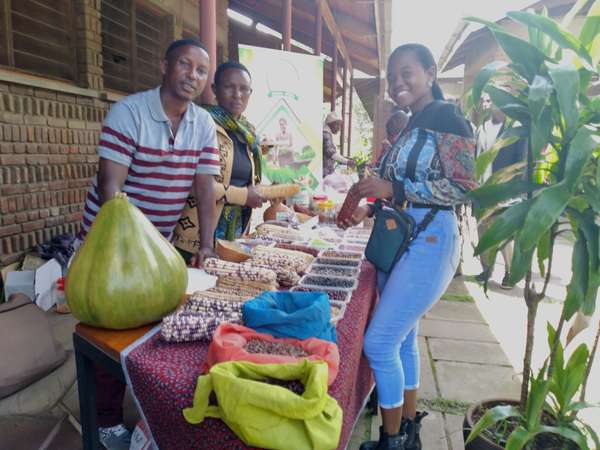
National Seed Bank Managers Forum - Dodoma, Tanzania 2025-11-04
November 21 - 22, 2025 | Royal Village Hotel, Dodoma
This 2-day event aims to bring together community seed bank managers in Tanzania (farmers operating in community seed banks), partner organizations, and other relevant stakeholders to exchange experiences, consolidate initiatives related to community seed banks, and co-create tools and resources for improved seed bank management.
Email ECHO East Africa Seed Bank Manager, Faith Juma, with questions: easeeds@echocommunity.org
Integrated Pest Management 2025-10-28
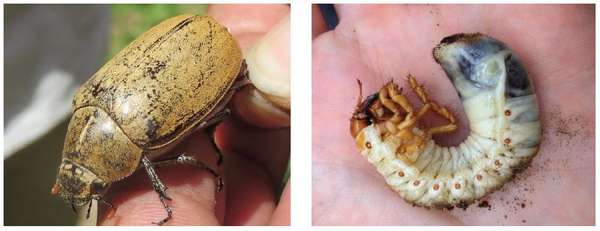
Pest control is a crucial part of farmer management of agroecosystems. The current global situation calls for a multi-pronged approach to pest management. To be widely applicable, this approach must provide farmers with options to control pests at various scales of production (from small farms to very large operations) with a diversity of resources. Integrated pest management, a strategy based on farmer innovations, is highly adaptable to specific contexts and reduces dependency on pesticides while still recognizing their use.
If you have other approaches to pest management that have worked for you in your context, please share them with the global ECHO Network on ECHO Conversations!
Example of IPM from the Island of Bali
View a quick photo guide of insect pest damage vs. other crop damage
Read IPM Technical Note Online
.jpg?w=600)
The importance of food preservation 2025-10-21
ECHO actively promotes, researches, and shares pathways and options for food preservation. Food preservation is a vital way to reduce postharvest losses, maximize profitability, retain or improve nutrient density of food commodities, and economically diversify within local food systems. ECHO West Africa has, for example, promoted and trained about creating tomato paste in areas where prices plummet as supply increases and farmers get less return on investment without this form of value-addition and preservation. ECHO East Africa has co-created drier designs for drying fruits and vegetables even in humid contexts.
Learn more about direct solar driers
.png?w=600)
EIAC 2025 Registration Closing 2025-10-14
Have you registered for the ECHO International Agriculture Conference yet? The deadline to sign up is October 24th!
You won't want to miss out on this gathering that brings together practitioners, researchers, and educators dedicated to eradicating hunger and improving lives through sustainable agriculture and community development. Through engaging plenary speakers, breakout sessions, and hands-on workshops, you'll explore practical strategies and pathways to flourishing for communities facing food insecurity around the world.
IFOAM Strengthening International Seed Network Survey available! 2025-10-07
If you are working in seed systems, please take 15 minutes to complete the survey here:
English:Mapping farmers' seed systems actors
French:Cartographie des acteurs impliqués dans la gestion des systèmes semenciers paysans
Spanish:Mapeo de los actores de los sistemas de semillas de los agricultores
The Strengthening International Seed Network Survey is the first step in a collective effort to connect and strengthen the many organizations, networks, communities of practice, and individuals working on farmers’ seeds and cultivating biodiversity around the world. This initiative is grounded in the belief that mutual support, solidarity, and knowledge-sharing are essential for advancing farmers’ seed systems. By participating in this survey, you will help:
- Map the landscape of who is working where, on what themes, and with which approaches.
- Make visible the diversity of initiatives and highlight opportunities for exchange and collaboration.
- Lay the foundation for future tools, platforms, and activities that can facilitate joint learning, coordination, and dialogue.
Your input will not only strengthen the picture of global work on farmers’ seeds but also ensure that the tools and collaborations we develop are relevant to your needs and realities.