Introduction
Sunflower (Helianthus annuus) is a very good cash crop in Tanzania, especially since the disruption of Ukrainian exports in 2022 (read more by Sanawa, 2022). With 97% of sunflowers being cultivated by small-scale farmers regionally, it is important to use open-pollinated varieties (OPV) to empower the small-scale farmer who cannot purchase hybrid seeds every year because of cost.
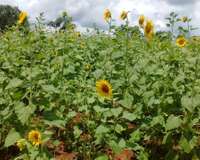
Figure 12. 'Record' field at the KT farm in Lindi, Tanzania. Source: Tim Tanner
'Record' is a high-yielding OPV (Figure 12), so farmers can save and reuse harvested seed. Locally certified seeds are available in our area. At KT we promote OPVs and the judicious use of machinery to empower local small-scale farmers.
Growing
If you are planning to plant by hand, soak your sunflower seeds in water for 6 to 12 hours before planting. This hastens germination and changes the smell of the seed which discourages rats and field mice from finding a free meal. If you are using mechanized planting, do not soak the seeds; they won't work in a planter very well when wet.
It is possible to get two harvests of sunflowers if timed correctly with the rains in southern Tanzania (one long and one short rainy season). Sunflowers have a high nitrogen (N) requirement, so if you are planning two crops in the same field, rotate the crop each season with a leguminous green manure cover crop. Root exudates of sunflower induce germination of seeds of root parasitic weeds (Striga hermonthica) in response to chemical signals, but if the weeds cannot find a suitable host, this leads to their death. In grain fields with Striga, sunflower can be rotated as a trap crop to control Striga. However, this rotation is not considered a fallow, since it requires significant N. With sufficient mulching and/or cover crops, you will conserve soil moisture from evaporation.
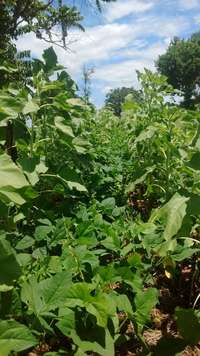
Figure 13. Intercrop of sunflower and cowpea (pigeon pea not in view). Source: Tim Tanner
The KT farm promotes biodiversity through intercropping during the growing season. Sunflower, cowpeas (Vigna unguiculata), and pigeon pea (Cajanus cajan) can all grow together (Figure 13). Plant pigeon pea (also helps to control Striga) and sunflower in alternating rows, with cowpea planted in the areas with more shade. In the next year, shift the rows so that sunflower is growing in a row that contained legumes the previous year, and continue for several seasons. This effectively fertilizes or fallows every other row each year.
The more variety of plants you can grow at one time in the same field, the healthier and more balanced the system’s microorganisms are. It seems that in practice, hybrid seeds tend to upset the natural balance of things. Hybrid plants grow faster and draw more resources out of the soil faster. This unbalances the microorganisms and nutritional levels of the soil. One ends up having to fertilize to compensate for the rapid depletion of soil nutrients, creating an artificial growing environment that becomes a vicious cycle. In this way, hybrid seeds ultimately enslave the poor farmer in a high-tech system that is unnatural, less resilient, and costly to maintain.
The role of bees in your sunflower production
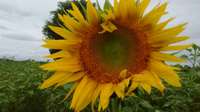
Figure 14. Bee on a 'Record' sunflower. Source: Tim Tanner
If you grow sunflowers, consider beekeeping to improve pollination (Figure 14). One sunflower head can have 2,000 seeds, and each one individually needs to be pollinated to produce seeds containing oil. Bees are the best pollinators. If farmers within a 5 km radius (the flight distance of the average honeybee) are also growing 'Record', then you can save seed for next year and still get good yield repeatedly. If you cannot guarantee that your neighbors are also using 'Record', then save seed only from the middle of your plot. Depending on the size of your field (and the distance to another variety) you can keep this seed for two harvests. After that, start over with certified 'Record' seeds again.
Improved pollination increases sunflower yield significantly, leading to economic increases even without harvesting the honey. When we started growing sunflowers, we read research that showed you could get up to 25 to 30% more harvest just by having 1 bee colony per acre (2.5 colonies per hectare).6 So absolutely raise bees if you grow sunflowers, even if you never buy the equipment to harvest honey. Incorporating bees into a farm is easy to establish. Use a simple top bar (Kenya V-style) beehive.7 They are simple to make, bait, and put around your farm. If you hang your hives or use hives on stilts, grease all connections with the ground. This is a pest management strategy to prevent ants and other crawling insects from accessing the hives. Bees also keep thieves away.
Further resources for bee keeping:
Odoobo, K. 2016. Sustainable Bee Farming Business Model. ECHO East Africa Pastoralist Symposium
Townsend, G.F. 1984. Beehive Designs for the Tropics. ECHO Technical Note no. 8.
Video and presentation on beekeeping by Daud Manongi
Beekeeping in the Tropics (free downloads):
Postharvest processing and marketing
Before investing in cultivating sunflowers or any crop, know the available and secondary markets. Calculate the number of plants to make it worthwhile and consider processing and transport costs. Some processors will discount their services in exchange for the seed cake. Marketing the oil under your own label generates more revenue, but it requires additional marketing efforts.
If you are just looking for a profit and you have the investment to go big, then you could consider a hybrid variety. We (KT) don’t recommend this as it will cause all your surrounding neighbors who are most likely not as wealthy to be forced to buy certified seed each year, because any hybrid you plant will affect the purity of their crop’s seed. So, that is an ethical question you must evaluate.
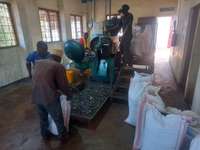
Figure 15. Oil mill for processing sunflower seed to oil at Kilimo Timilifu. Source: Tim Tanner
KT uses a machine (Figure 15) that can process 8 tons of sunflowers in 24 hours. Processing includes high pressure filtration using compressed air that preserves the raw quality of the oil. The machine price in Tanzania is 12,000 to13,000 USD but there are smaller machines available as well. KT also has a seed cleaner, food-grade oil pump, and oil storage tower with a bottle-filling system that is not automated. Bottles are filled and shrink-wrapped into 24-piece blocks. You can view two videos of our machine processing here: KT Oil Press Video and Oil Mill – Farmer’s Gold.
Costs and benefits of mechanization
Consider the costs and benefits of mechanization. Do not assume that just because you want to have a big farm, that you have to mechanize. Large landholdings 8 can be planted by hand, especially if you incorporate jab planters for employees. Evaluate the labor cost compared with the machinery operating cost. At KT we do not use machinery for production, doing all our farming with panga (machete) and jembe (African hoe). But if you are going to go large-scale without mechanization, there are some advantages and disadvantages.
Advantages of non-mechanized planting:
- Employs many people at planting and weeding times.
- Involves and provides informal education to the community through observation and employment.
- Builds lots of good relationships in the community.
- Requires minimal initial investment and maintenance
Disadvantages of non-mechanized planting:
- You have to hire more local people and pay them.
- You have to deal with cultural issues like:
- Some employees will not work in the employer's garden with the same effort they will work in their own.
- Sometimes there is a belief that a company/mission/NGO is rich, leading to indifference.
Closing thoughts
KT’s work in Tanzania raises awareness of the potential of sunflower. The insights and recommendations presented in this article are meant to help you evaluate the potential of sunflower production in your context and provide ideas for growing sunflowers sustainably and with lasting, positive impact on the lives of small-scale farmers and their communities.
References
Abbasi, K.H., M. Jamal, S. Ahmad, H.A. Ghramh, S. Khanum, K.A. Khan, M.A. Ullah, D.M. Aljedani, and B. Zulfigar. Standardization of managed honey bee (Apis mellifera) hives for pollination of sunflower (Helianthus annuus) crop. Journal of King Saud University-Science 33(8):101608 https://doi.org/10.1016/j.jksus.2021.101608
Sanawa, F. 2022. This is how Tanzania can meet edible oil challenges. The Citizen, Nation Media Group. Saturday, September 03.