English (en) | Change Language

About the Impact Center

This center was developed to provide ECHO services to help those in East Africa who work with the poor more effectively, especially in  ​​agriculture and alternative methods. ECHO East Africa is a basic training center providing technical assistance to help organizations and community development workers work more effectively to reduce hunger.


Services

  • Conduct research and development on locally appropriate sustainable agriculture practices
  • Collaborate with, and provide networking opportunities for, development agencies working in East Africa
  • Provide garden displays and demonstrations of agricultural options
  • Provide agricultural resources for study
  • Demonstrate alternative training methods, including creative collaboration and exhibitions
  • The ECHO seed bank provides packaged seeds, as well as seed exchange opportunities and seed conservation education
  • Training for home gardens (organic gardens, kitchen gardens, gardens, bags and manufacture of peat)
  • Training and visits to fruit tree nurseries
  • Organization of conferences, workshops, forums, exchange visits, and training in best practices
  • Network between farmers and other development partners
  • Conduct agricultural fairs


Contact:

Charei Munene

ECHO East Africa Impact Center
P O Box 15205
Arusha Tanzania

eastafrica@echocommunity.org


East Africa Updates

Creation of bioliquid fertilizer in Central Africa 2025-12-09
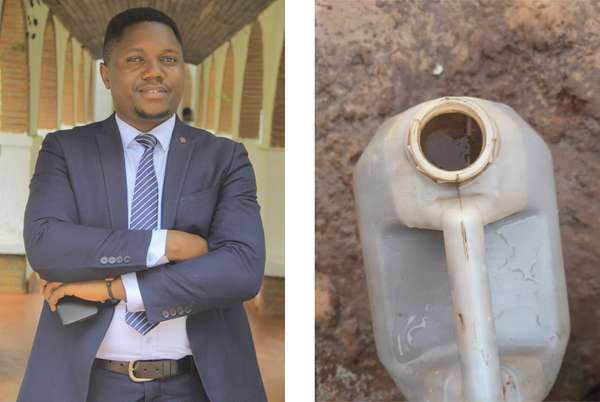
I am Kasereka Kaghesi Richard, originally from the East of the DRC, Nord-Kivu Province, in the city of Butembo, coordinator of the organization POID-RDC (People Organizing Initiatives for Development). We express our sincere gratitude to ECHO, the trainer Hassan Djebro, the facilitator Mwalimu, and all the other trainers who continue to support us and strengthen our capacities through the webinar series ECHO is conducting for Central Africa.

Despite the material challenges, we are moving forward with determination. The training received has allowed us to transform simple local resources into a useful product for our communities. This proves that, even without significant resources, innovation and willpower can produce tangible results. We firmly believe that this work is a seed for a better future. With the experimentation of our biofertilizer, we are taking a new step towards agricultural empowerment and the sustainable development of our communities.

Thanks to the training received from ECHO, we followed the following steps:

  1. We took a 20-liter bucket.
  2. We started by adding manure, fresh herbs, two shovelfuls of soil, then ash, and water.
  3. We also added some animal bones and feathers.
  4. The mixture was kept in a shaded area.
  5. Every morning and every evening, we used a tree stick as a stirrer to mix the preparation.

This is the simple and effective procedure we applied to obtain our biofertilizer.

We will now move on to the utilization phase to experiment with our product directly in the field and observe its positive effects on our crops.

About East Africa

Food insecurity has increased significantly in East Africa due to the rapid increase in population, with an increase of 150% by 2050. Over 40% of children in East Africa are malnourished. The largest number of these children are orphaned and living in difficult circumstances. Most of the rural population lives in poverty, relying on a subsistence lifestyle. Some of the reasons for this situation include:

  • A High rate of loss of yield
  • Underdeveloped, weak markets, farmers lack the infrastructure to improve thier value chains
  • Minority farmers and herdsmen in the region, don't have adequate access to agricultural services, continuing education or access to formal training
  • Increased pressure forcing families to cultivate a little land, which results in land degradation and loss of sustainability in food production
  • Drought, especially in arid pastoralist areas.
  • Deforestation
  • Flooding
  • Climate

Where we are located

If you are driving North from Arusha, it is 15 km north of the city along A104 (the main road). After you see Mount Meru University on the right, the office will be another half km north and on the right-hand side of the road.
If you are driving South from Nairobi, it is 96 km south of the Namanga border crossing along A104 (the main road). As you see Mount Meru getting closer, pay attention and look for the Habari Maalum Station which will be on the left-hand side of the road.
 
If you come via public transportation, ride the bus (dala dala) from Arusha to Ngaramtoni; then take another bus from Ngaramtoni to the Habari Maalum Radio Station. Guards and staff will be happy to give you directions to the front door of the ECHO office.

Calendar [ more ]