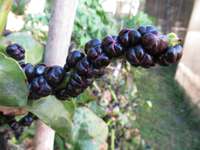
Figure 16. Malabar mature seeds. Source: ECHO Staff
Native to the Indian Subcontinent and SE Asia (POWO, 2023), Malabar spinach (Basella alba syn. Basella rubra) has spread throughout the world as a heat-resistant alternative to the cooler climate spinach (Spinacia oleracea). It is marketed as a tropical spinach, widely adapted to a variety of soils and climates. Malabar spinach is a climbing perennial vine and is mostly grown as an annual vegetable with support in home gardens, sometimes produced as a market crop without staking (Tiwari et al., 2024).
It has green, smooth flesh and stems with alternate leaves that are oval to heart-shaped. The small white to green flowers grow in the junction between the leaf and the stem and form purplish to black round seeds when mature (Figure 16).
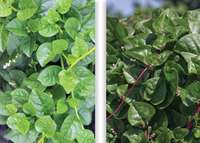
Figure 17. Green, B. alba (left) and red, B. rubra (right) vined varieties of malabar spinach. Source: ECHO Staff
Basella alba and Basella rubra differ principally in color,9 with B. alba having green leaves and stems and B. rubra having purplish-red stems and leaves tinged with purple (Figure 17). This leads to different chemical constituents and culinary uses. B. rubra also is used as an ornamental.
Climate and soils
Malabar spinach grows in a wide range of climates (wet and dry tropics) under full sun to partial shade, up to 1500 m, as long as the temperature is between10 and 35°C, with the ideal temperature between 23 and 27°C (FAO, 2022). Precipitation requirements range from 700 to 4200 mm, with ideal annual rainfall of 2000 to 2500 mm. Plants need at least 20 to 50 cm of well-drained, fertile soil regardless of the texture, and tolerate a range of pH from 4.3 to 7.5, preferring 5.5 to 7.
Cultivation
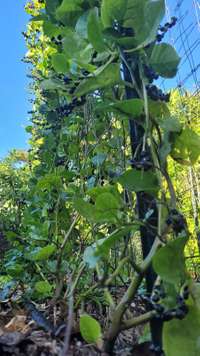
Figure 18. Green, B. alba trellised vines. Source: Jason Weigner
Malabar spinach grows as a perennial vine or as an annual. You can propagate it from stem cuttings or sow seeds directly into soil at a depth of 1.5 cm (Akther et al., 2019). Soak seeds for a day prior to sowing to soften the seed coat for enhanced germination (Tiwari et al., 2024). You can plant stem cuttings (15 cm long) directly in the soil. Partial shade during establishment helps reduce water loss to transpiration and facilitates the rooting of young plants. Hardy and easy to grow, Malabar spinach responds well to basic horticultural management. Allow space for the vines to grow and account for any other crops being grown together with Malabar spinach. Experimenting with combinations of production practices, Bwabi (2018) obtained the highest dry matter yield (33 t/ha) from B. alba plants that were spaced 20 cm apart, fertilized, trellised, and pruned. Fertility inputs in this trial included farmyard manure and inorganic fertilizer; similarly, Akther et al. ( 2019) in Bangladesh found that a mix of vermicompost and NPK performed well. Pruning promotes branching and subsequent leaf production. Tiwari et al. (2024) suggest removing the growing tips after seedlings have produced five true leaves. Keeping vegetative material off the ground (Figure 18) helps limit disease incidence, improving the presentation and salability of the product.
Malabar spinach is susceptible to drought stress due to its shallow roots (Ajewole and Olorunmaiye, 2023; Tiwari et al., 2024). Mulch conserves moisture and controls weeds. Comparing no mulch to rice straw, rice hulls, and silver plastic, Gonzaga et al. (2014) found that mulching increased production regardless of the material used. Akther et al. (2019) used mosquito netting for shading—to moderate against intense sun— and insect exclusion. Experiment with and adopt production practices that suit your context and available resources. The cultivation cycle is 55 days to 180 days (FAO, 2022) but may be harvested as needed.
Pests and diseases
Malabar spinach is generally tolerant to insect pests and diseases. A principal pest of Basella alba is leafminers (Liriomyza spp.) whose larvae cause damage from tunneling, leading to reduced photosynthesis. Locally present caterpillars like Helicoverpa armigera and Spodoptera exigua and thrips (Frankliniella occidentalis) cause moderate damage; aphids (Myzus persicae) and whiteflies (Bemisia tabaci) cause less damage but spread viral disease. Flea beetles (Phyllotreta spp.) are a minor problem (PIP, 2009). The nematode Pratylenchus penetrans is also a soil-borne pest (Qiu and Liu, 2020).
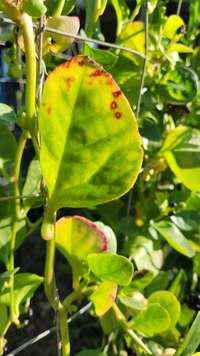
Figure 19. Circular spots with purple boarders indicating C. beticola infection. Source: Jason Weigner
Fungal diseases in early growth include the “damping off” complex caused by Pythium spp., Rhizoctonia solani, or Fusarium spp. Cercospora beticola is a disease that affects B. alba. The symptoms are circular spots, often with purple borders, that enlarge and develop necrotic centers (Figure 19). This leads to reduction of photosynthesis, premature leaf drop, and yield reduction, with the use of Trichoderma spp. controlling this plant disease (Sultana et al., 2025). Control measures include copper-based fungicides and ensuring air circulation to help reduce disease spread. Akther et al. (2019) also noted that, compared to the control, biopesticides decreased the incidence of Cercospora ssp.
Culinary and nutrition
Succulent young and mature leaves, and tender stems are eaten fresh or cooked and mixed with stew or other vegetables. On cooking, the green stem/leaf species retains its fresh green color while the red species loses much pigment to the water and is less attractive.
The leaves have a mild flavor or are almost tasteless. The stems may be somewhat bitter and become gelatinous or mucilaginous when overcooked. Malabar spinach is a good source of vitamins A and C, calcium\ iron, and other health-promoting compounds (Deshmukh and Gaikwad, 2014 ).
References
Adenegan-Alakinde, T.A. 2023. Taxonomic significance of leaf architecture in the genus Basella Linn. in Nigeria. Research in Plant Pathology 25-28. https://doi.org/10.25081/ripb.2023.v13.8576
Ajewole, T.O. and K.S. Olorunmaiye. 2023. Physiological and proximate assessment of Basella alba L. and Basella rubra Roxb. under drought stress. FUOYE Journal of Agriculture and Human Ecology 7(1):47–55. https://doi.org/10.62923/fuojahe.v7i1.255
Akther, M.M., M.A. Islam, M.S. Rahman, M.H. Rahman, and D. Nandwani. 2019. Effects of organic and inorganic fertilizer combination with insect netting on the production of Indian spinach (Basella alba L.). Archives of Agriculture and Environmental Science 4(3): 268-272 https://dx.doi.org/10.26832/24566632.2019.040302.
Bwabi, M. 2018. Influence of spacing, trellis/ staking and pruning on growth and yield of vine spinach (Basella alba L) in western Kenya. M.Sc. Thesis. School of Agriculture and Biotechnology, University of Eldoret, Kenya. 60pp. http://erepository.uoeld.ac.ke/xmlui/bitstream/handle/123456789/1003/MASOMBO%20BWABI.pdf?sequence=1&isAllowed=y
Deshmukh, S.A. and D.K. Gaikwad. 2014. A review of the taxonomy, ethnobotany, phytochemistry and pharmacology of Basella alba (Basellaceae). Journal of Applied Pharmaceutical Science 4(01):153-165.
Food and Agriculture Organization (FAO) and IIASA. 2022. Basella alba. ECOCROP, Global Agro-Ecological Zones version 4 (GAEZ v4) Accessed 11 Nov. 2025 URL: https://gaez.fao.org/pages/ecocrop-find-plant
Gonzaga, Z.C., H.B. Dimabuyu, R.R. Sumalinog, and O. B. Capuno. 2014. Increasing productivity of Malabar spinach (Basella alba L. and Basella rubra L.) grown in the marginal upland area of Inopacan, Leyte through different mulching materials. Annals of Tropical Research 36 (Supplement):166-78. https://doi.org/10.32945/atr36s11.2014.
PIP. 2009. Guide to good crop protection practices for lettuce (Lactuca sativa), spinach (Spinacia oleracea and Basella alba), and leafy Brassica (Brassica spp.). COLEACP (Africa, Caribbean, and Pacific). Brussels, Belgium.
Plants of the World Online (POWO) Kew Science. 2023. Basella alba L. Plants of the World Online. https://powo.science.kew.org/taxon/urn:lsid:ipni.org:names:164286-1#other-data. Search term “Basella alba”. Accessed 11 Nov. 2025
Qiu, Y. and G. Liu. 2020. Florida Cultivation Guide for Malabar Spinach. Institute of Food and Agricultural Sciences (IFAS) Extension pub HS1371. University of Florida, Gainesville, FL. https://journals.flvc.org/edis/article/view/122029/124509
Sultana, S., Z. Pervez, S.R. Promy and S. Nahar, 2025. Eco-friendly management of Cercospora leaf spot in Indian spinach using trichocompost and organic amendments. International Journal of Plant Pathology 16: 1-7. DOI: 10.3923/ijpp.2025.1.7
Tiwari, A., M. Kumari, and A.K. Singh. 2024. Chapter 10 Cultivation of Malabar spinach. pp 101-109. In: Cultivation of underutilized vegetable crops Volume-1.