ECHOcommunity Actualizaciones

ECHO International Agriculture Conference - Last Chance to Register 2021-11-02
Tomorrow, we will be coming together for ECHO's Online International Agriculture Conference! If you have not yet registered for the Online Conference, please do so soon so you can begin to interact with other attendees!
EDN Número 153 Disponible Ahora 2021-10-04
Temas de Relieve:
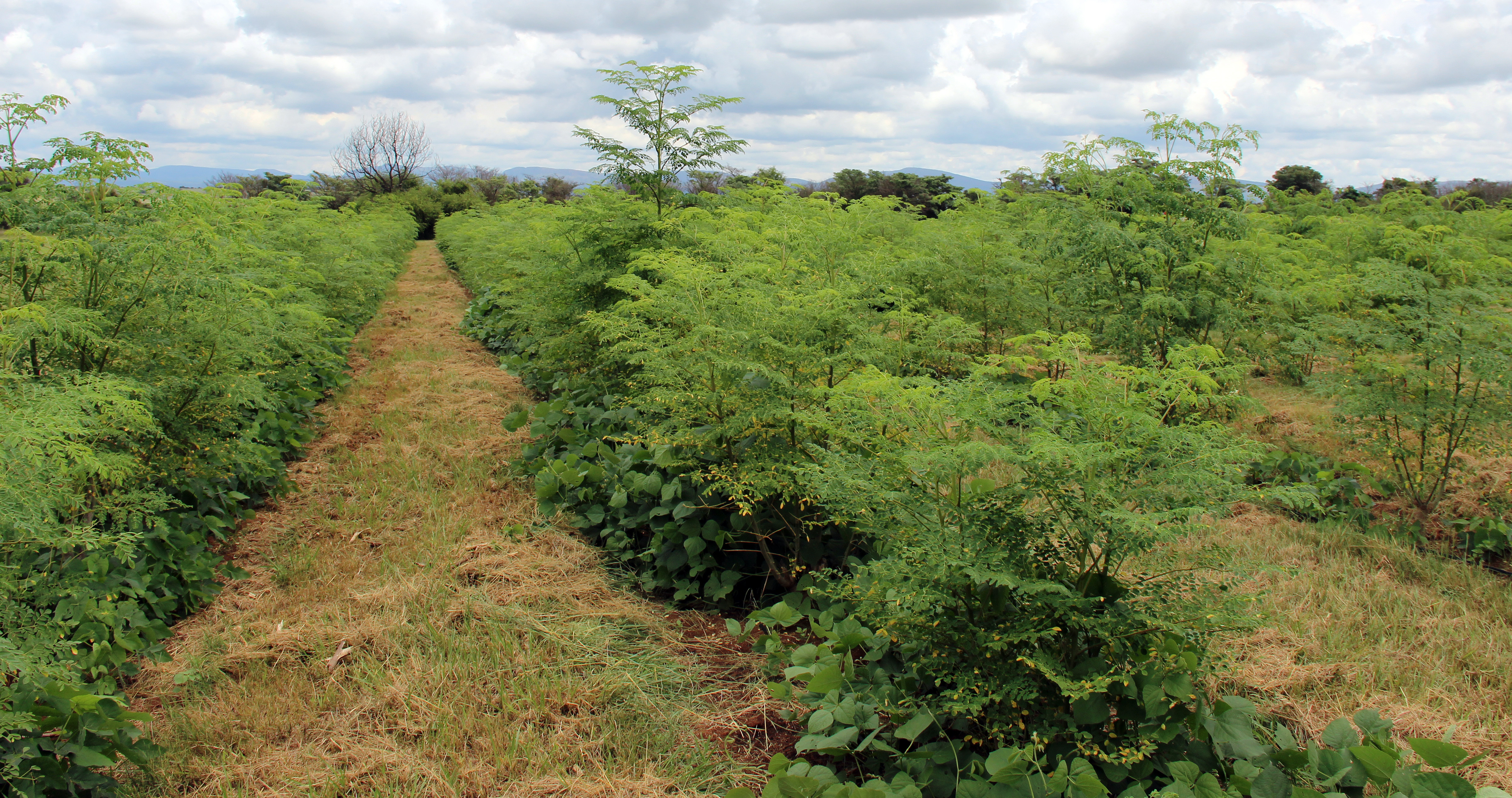
- Productividad de la moringa intercalada con leguminosas
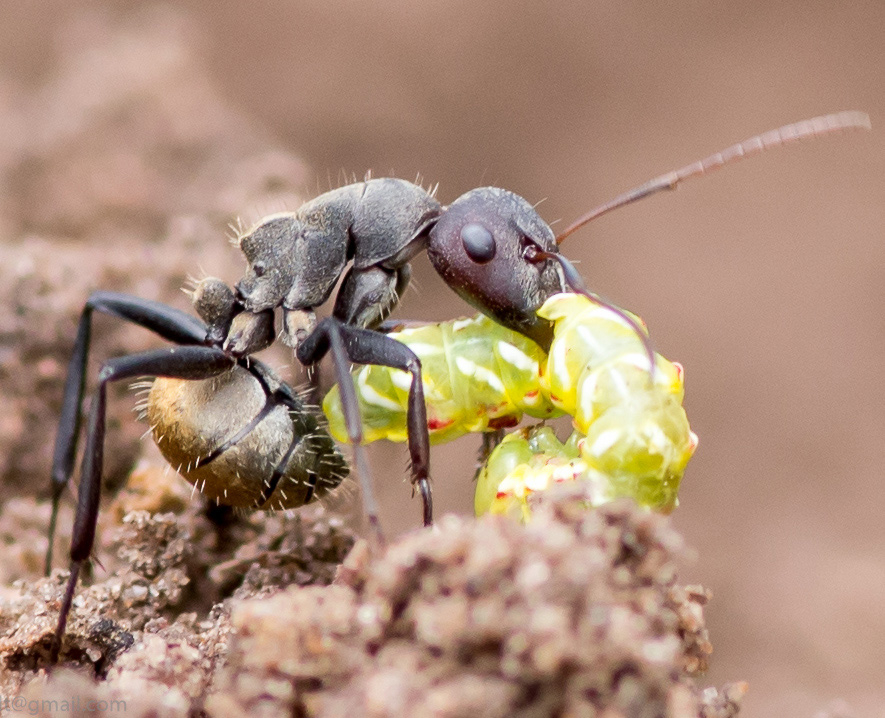
- Manejo de plagas de insectos: evaluación y valoración
- Ecos de nuestra red: Sistema de cultivo intercalado anual con gliricidia
- Del Banco de Semillas de ECHO: Col rizada ‘Lacinato’ para huertos caseros
- Libros, sitios web y otros recursos: Food Plant Solutions y Libros descargables
Productividad de la moringa intercalada con leguminosas
Tim Motis
Excerpto:
La gente a menudo pregunta cuánto polvo de hoja puede esperar de sus árboles de moringa. La Tabla 1 muestra la suma de nuestras dos cosechas durante cada año. Durante el segundo año después de la siembra, sin leguminosas, los árboles de moringa produjeron un total de 76 g/árbol de polvo de hoja, el equivalente a 255 kg/ha. Eso significa que, durante un segundo año después de la siembra, 1 ha de una plantación de moringa como la nuestra puede producir un año de polvo de hojas para personas que consuman 5 g de polvo al día. Witt (2013) proporciona el contenido nutricional de 5 g (15 mL o 1 cucharada en volumen) de polvo de moringa, una cantidad descrita como una porción realista.
.jpg?original=true)
Fill It Full: A Simple Way to Reduce Weevil Damage in Maize Seed Stored in Airtight Containers 2021-09-27
Postharvest losses inflicted by insect pests in stored grains represent major challenge smallholder famers face in the global South. The maize weevil (Sitophilus zeamais) is one of the most important postharvest pests in maize. With dry maize stored in woven polypropylene bags, Likhayo et al. (2018) found that insect pests (maize weevils and another maize pest called the lesser grain borer [Prostephanus truncatus]) reduced grain weight by 36%. Such losses threaten farmers’ food security and overall financial stability.
ECHO East Africa Virtual Symposium 2021-09-14

Jisajili sasa kwa ajili ya Kongamano la ECHO Afrika Mashariki 2021-08-17
Kongamano la Kilimo Endelevu na Teknolojia mbadala
septemba 28-30 2021
Kwenye mtandao
EDN Número 152 Disponible Ahora 2021-07-22
Temas de Relieve:
- Manejo de plagas insectiles: opciones para controlar las poblaciones de plagas
- Del Banco de Semillas de ECHO: Tomate Everglades (Silvestre)
- Ecos de nuestra red: Experiencia de mejoramiento agrícola con A. angustissima
-
Libros, sitios web y otros recursos: Kit de soya como tecnología apropiada para emprendedoras - Una reseña
Opciones para controlar las poblaciones de plagas
Stacy Swartz
Excerpto:
Se puede arrancar o aplastar orugas a mano. Los escarabajos, chinches hediondos y otros insectos más grandes pueden meterse en un cubo de agua jabonosa. El jabón rompe la tensión del agua, haciendo que los insectos se ahoguen en el cubo. Las aspiradoras de baja tecnología aspiran las plagas de las plantas en recipientes que luego se vierten en agua jabonosa; este método se utiliza sobre todo para recoger especímenes para la identificación de plagas.
EDN #152 Now Available 2021-07-06
In this issue:
- Insect Pest Management: Options for Controlling Pest Populations
- From ECHO's Seed Bank: Everglades (Wild) Tomato
- Echoes from our Network: Acacia angustissima Farming Improvement Experience
- Books, Websites, and Other Resources: Soy Kit as an Appropriate Technology for Women Entrepreneurs - A Review
Insect Pest Management: Options for Controlling Pest Populations
Stacy Swartz
Excerpt:
Mechanical interventions for pest control are generally categorized as passive or active. Passive options include films, dusts, oils, soaps, and traps. Films such as kaolin clay can deter insects from landing on plants and/or deter feeding behaviors, but such films need to be reapplied as the plant generates new growth. Dusts such as diatomaceous earth can be placed around the base of plants to keep crawling pests from accessing the plant. Dusts can also be placed on the leaves as a feeding deterrent. Oils and soaps that kill pests are physical controls because their effect is short-term, and they act physically on the pest by smothering them or breaking down sensitive exterior tissues. Oils and soaps must contact pests and are most effective against soft-bellied insects such as aphids, mealybugs, whiteflies, spider mites, and scales. Repeated application is often required to control a population because oils and soaps are most effective at controlling young individuals.
Asia Note #46 Now Available 2021-06-14
Featured in this AN
-
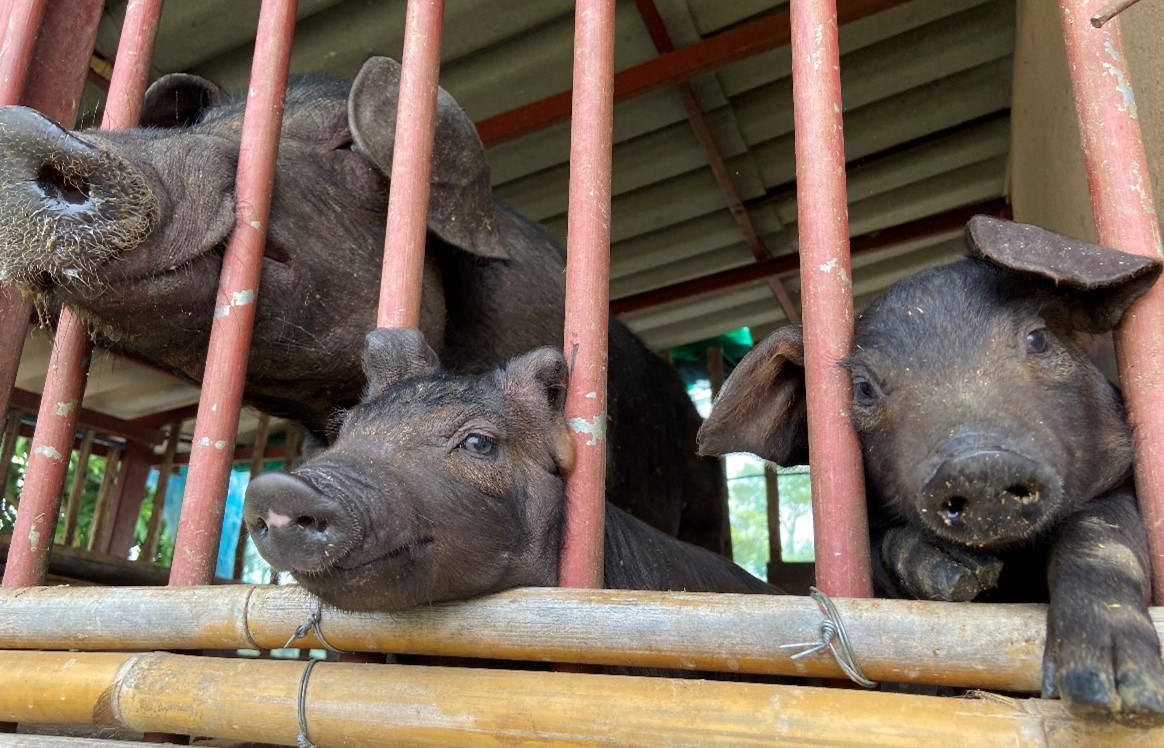
African Swine Fever Virus: Overview and Prevention on the Small Farm
-
[Editor’s Note: For questions, comments, or personal experience on this topic visit ECHOcommunity Conversations: African Swine Fever Virus]
-
-
[Example] Small Farm Biosecurity Plan for the Prevention of African Swine Fever
-
I Suspect ASFV on my Farm: What Steps Should I Take?
-
ECHOcommunity Conversations: Find Practical Answers from a Global Network of Agriculturalists
East Africa Note 7 Now Available 2021-04-21
In this issue:
- Families Benefited with Dairy Goats Project
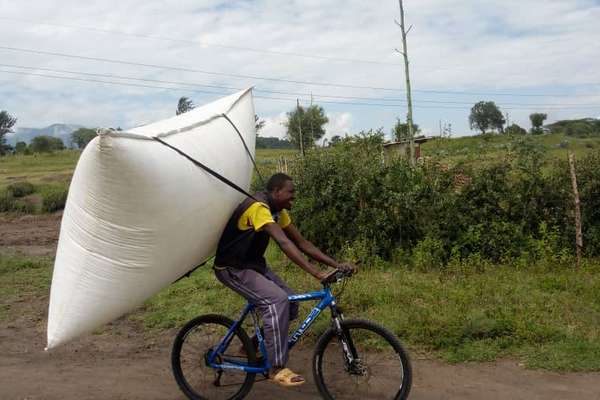
- A Research Project: Packed Biogas in Bags
- Green Manure/ Cover Crops: jack bean
Packed Biogas in Bags: a research project
Harold Msanya
Excerpt:
Evelyn Mguo’s family is a consumer of bagged biogas who participated in phase one of the research project –‘Peer to peer’, a business model to test the viability of retailing methane gas in portable bags, from the farm gate of a biogas digester owner for distribution/sale to a neighbor. Evelyn says,
Both charcoal and firewood are difficult to access during the rainy season. I rarely use charcoal and firewood to cook local foods such as Makukuru and Ndizi. I grew up in a family that used firewood as the only source of energy and hence I used to believe that certain local foods taste better if they are cooked using firewood. I have now used the bagged biogas for three weeks and in my opinion it is a good option. I have managed to cook all types of foods that I used to cook using LPG. One (1m³) bag lasts 3 to 4 days and if it can be obtained for Tsh 2,000 per bag, it means I will cut down the cost used for LPG and other sources by almost 50%. My only request is for the project team think about how to package it in larger quantities so that it can last longer for at least seven days or more.

Announcing the ECHO East Africa Symposium on Sustainable Agriculture and Appropriate Technology 2021-04-14
28th-30th September 2021
You are cordially invited to join us for the 6th ECHO East Africa Biennial Symposium on Sustainable Agriculture and Appropriate Technologies 2021. We hope that you will make time to gather online with us at this very important and effective event for learning, information sharing, and networking for those working and serving in the East Africa Region. Participants are encouraged to register online for a $20 registration fee and that we welcome donations from good-willed individuals to help those who cannot pay this fee.