%20and%20azolla%20(bottom)%20growing%20in%20water.jpg?w=200)
Figure 1. Duckweed (top) and azolla (bottom) growing in water. Source: ECHO Asia Staff
Duckweed (Lemnaceae family) and azolla (Azolla genus) are two aquatic plants with high potential for use in livestock feed. In contexts where water is plentiful, production of these plants can be resource-efficient, requiring little financial or equipment input. In addition to their use as livestock feed, they have a range of useful applications such as water filtration and green manure.
This article introduces these two plants, lists their potential for use in smallholder livestock systems, and shares cultivation methods (Figure 1). Several other aquatic plants are used as livestock feed (e.g. water hyacinth), but duckweed and azolla are the most common aquatic plants and typically have superior feed quality and growth rates.
What are azolla and duckweed?
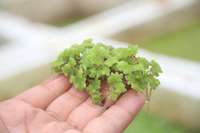
Figure 2. Azolla pinnata, one of the most common azolla species used for livestock feed. Source: ECHO Asia Staff
Azolla (Figure 2) is a genus of aquatic ferns that grow floating on the surface of still or slow-moving water bodies. These ferns can grow rapidly, doubling in volume within two to three days in ideal conditions.1 Azolla forms a symbiotic relationship with the nitrogen-fixing cyanobacterium Anabaena azollae that lives within its leaf. This symbiosis enables atmospheric nitrogen fixation to occur naturally, allowing the plant to thrive in low-nitrogen water.
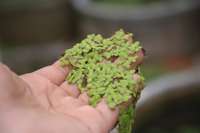
Figure 3. Lemna minor, one of the most common duckweed species used for livestock feed. Source: ECHO Asia Staff
Duckweeds (Figure 3) are small, free-floating flowering plants belonging to the family Lemnaceae, comprising 5 genera (Lemna, Spirodela, Landoltia, Wolffiella, and Wolffia) and 36 species (Sree et al., 2016). There is considerable diversity within these species; however, most duckweeds have two small, flat, oval fronds (leaves), and a simple root. Duckweed reproduces through asexual budding, with doubling time occurring in less than two days under ideal conditions (Stewart et al., 2021).
Feed value
Given the diversity in species and production systems of duckweed and azolla, nutritional content estimates vary considerably. Each species has dramatically different nutritional content, and the growing conditions also strongly influence nutritional content. Estimates of average feed values are provided in table 1, based on a literature review summarized by Tran (2015) and Huezé and Tran (2015). Given the variability in nutritional content across the literature, this table is indicative only.
| Feed Value | Duckweed | Azolla | ||||
|---|---|---|---|---|---|---|
| Average | Min | Max | Average | Min | Max | |
| Dry Matter | 5.6% | 4.6% | 7.9% | 6.7% | 5.1% | 8.7% |
| Crude Protein (based on Dry Matter) | 29.1% | 24.9% | 38.6% | 20.6% | 13.9% | 28.1% |
| Neutral Detergent Fiber (based on Dry Matter) | 40.1% | 33.9% | 58.2% | 43.8% | 35.4% | 52.3% |
| Gross Energy (MJ/kg DM) | 18.2 | 17 |
Use in livestock feed
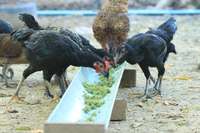
Figure 4. Chickens eating fresh azolla. Source: ECHO Asia Staff
Both aquatic plants have relatively high protein content and energy levels. However, they also have high fiber levels, which limits how much you can feed to non-ruminant livestock as a percentage of their diet (Figure 4). Importantly, both have very low dry matter content. Over 90% of the volume of freshly harvested aquatic plants is water. Livestock need to eat a large volume to obtain equivalent nutrition intake to feeds with higher dry matter. These plants can also be dried before inclusion in livestock feed.
The key benefit in using both species is that they offer relatively high protein levels, which make them a potentially low-cost protein supplement. Protein is typically the most expensive component of purchased livestock feed. Supplementation with duckweed and azolla increases the overall protein and energy content of a livestock feed at low cost.
High rates of inclusion may have negative nutritive impacts due to antinutritional factors such as tannins and the relatively high fiber content of these plants (Demann et al., 2023). Ruminants can tolerate a higher dietary percentage of aquatic plants than poultry, with pigs somewhere between ruminants and poultry. Start feeding aquatic plants in small amounts, and monitor livestock performance as you increase the feeding rate.
Harvest duckweed and azolla by scooping plants off the water surface. Then feed directly to livestock. If duckweed and azolla are grown in dirty pond water, rinse harvested plants with clean water prior to feeding to improve palatability to livestock and reduce potential pathogens.2 Larger-scale operations often dry and grind the plants prior to feeding. The key benefit of drying3 is that the lifespan of the feed is extended before spoilage. Drying may also increase palatability and feed intake.
At ECHO Asia, we feed both duckweed and azolla to chickens (Figure 5). We scoop plants out of the water using a plastic basket, and feed fresh plants directly to the chickens. We do not dry the plants before feeding. Chickens tend to find the azolla more palatable than the duckweed. However, in our context, duckweed tends to grow faster than azolla. Harvest and feeding takes just a few minutes.
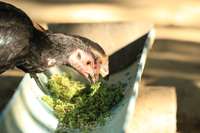
Figure 5. Chicken eating fresh azolla. Source: ECHO Asia Staff
ECHO Asia measured the increase in weight of duckweed and azolla per week under conventional management in November 2025. For each gram of duckweed added to a container, 4.5 grams were harvested after 7 days (doubling time in 3.23 days). For every gram of azolla added, 3 grams were harvested after 7 days (doubling time in 4.42 days). However, once the surface of the water is covered, or fertilization is delayed, the growth rate declined rapidly.
How much to feed
Feeding recommendations for azolla and duckweed vary widely, in part because the nutritional value of these feeds varies. When introducing a new feed, start slowly and gradually increase the proportion of the new feed in the diet over time. Observe your livestock, and if you see any negative symptoms, decrease the feed portion to a previously observed safe level (no negative symptoms).
In general, azolla and duckweed are highly digestible by ruminants (cows, sheep, and goats), and supplementation with azolla and duckweed typically increases production (weight gain). Ruminants require large volumes of feed, and azolla and duckweed are almost always used as a supplement rather than the base of the feed.
Azolla and duckweeds’ high fiber and antinutritional factors limit dietary inclusion for pigs and chickens. For pigs, supplementation with up to 15 to 20% of the diet with dried azolla/ duckweed has no adverse effects in most studies reviewed. Poultry are more sensitive. One review article reported generally positive results around 5% azolla supplementation for poultry. However, there are also studies showing a negative impact on poultry production with modest levels of supplementation. Generally, dietary inclusion at 5-10% of dry matter fed typically improves poultry production, while over 15% often leads to production losses (Sońta et al., 2019). Azolla supplementation typically results in egg yolks with a brighter yellow color.
Introduction to producing azolla and duckweed
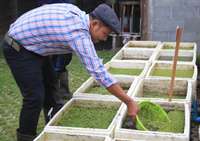
Figure 6. Dr Krit Suriyachaipun harvesting azolla and duckweed trial at ECHO Asia. Source: ECHO Asia Staff
Aquatic plants grow in a shallow body of water. Duckweed and azolla have a tendency to spread as weeds when introduced to ponds. Construct shallow production ponds by digging shallow pits and lining them with plastic sheets, a popular cultivation option in severely resource-constrained contexts. Other common methods of production include shallow concrete ponds, plastic or Styrofoam tubs (Figure 6), or polyethylene sheets secured inside bamboo frames.
Both plants need water containing dissolved nutrients to thrive. Azolla can tolerate low water nitrogen levels due to its nitrogen fixing abilities. Manure slurry, soil, and/or fertilizer are natural options for fertility inputs. Phosphorus fertilizers are often added for commercial scale azolla and duckweed production, and urea is added for duckweed. In resource-constrained contexts, periodically (e.g. every two weeks) add manure slurry to the water to sustain healthy growth.
Both plants benefit from shade, with preferred shade levels varying by species. Other key factors that need to be managed to ensure plant growth include water and air temperature, water pH, and the prevention of overcrowding. In the lower-altitude tropics, temperatures are generally sufficient for growth year-round.4
Aquatic plants grow exponentially. Every gram of duckweed/azolla is continually growing new feed. To maximize growth, leave as much as possible in the ponds and harvest frequently. Removing most of the duckweed/azolla at each harvest means that it will take a long time to regrow to fill the production pond. Instead, try to harvest when the pond is nearly full, and leave around 70% of the duckweed/azolla in place.
Smallholder-scale: ECHO Asia’s System
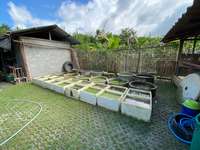
Figure 7. Production spaces at ECHO Asia. Currently in renovation without shade cloth. Source: ECHO Asia Staff
ECHO Asia uses both concrete water tank cylinders and Styrofoam tubs to grow these plants (Figure 7). They are located immediately beside our livestock feeding areas. Shade is provided by a shade cloth. The tanks have a simple overflow system to prevent rain from washing the plants out of the tanks.
Fresh cow manure is mixed in a tank not containing plants with water, and left to mature for 5 days with no additional mixing. This is then scooped out of the tank, poured through a large plastic sieve to remove dung particles, and spread across the surface of the ponds around every two weeks. Each container has a layer of regular soil (heavy clay subsoil) at its base.
Semi-commercial scale: Tamil Nadu Agricultural University System
The following system is recommended by the Tamil Nadu Agricultural University (TNAU) for small-scale commercial azolla production, and was described by ECHO intern Nitin Rex Sancho. Similar systems have been widely adopted across South India.
Position the azolla pond in a shaded place (30–50% sunlight) to protect Azolla from too much direct sun. TNAU recommends a pond size of 2 m long, 1.5 m wide, and 10 to 15 cm deep. Any depth greater than 10 cm is sufficient, and any size will work. Consider ease of harvesting (e.g. how far a person can reach with their arm safely) when designing the pond size.
Dig the pond into the ground and line with bricks, concrete, plastic sheets, or plastic tarpaulins to stop water loss. Specially made High-Density Polyethylene (HDPE) ponds are commercially available in Southern India.
HDPE azolla beds (350 grams per square meter of material) provide a durable and efficient environment for azolla cultivation. They are UV-resistant, sturdy, and long-lasting, ensuring optimal water retention and a stable growth surface. An ECHO network member in Tamil Nadu reported that large HDPE beds 3.6 x 3 x 0.3 m in size cost 2,000 Indian Rupees (around 24 USD), with smaller 2.7 x 1.2 x 0.3 m sizes around 1,000 Indian Rupees (around 12 USD).
Spread about 10 to 15 kg of fine, fertile soil evenly at the bottom for nutrients. Add cow dung slurry (aged for 4 to 5 days) and some superphosphate fertilizer to supply extra phosphorus. Fill the pond with clean water up to 10 to 15 cm deep so azolla roots float freely and don’t touch the soil. Leave the pond still for 2 to 3 days so the soil and nutrients can settle before adding azolla.
Add at least 1 kg of healthy azolla on the water surface. Spread it out gently. Azolla will form a thick green mat covering the water in 7 to 14 days. After about 2 weeks, start harvesting 1 kg for every 4 m² daily. Use trays or sieves to harvest and wash azolla well with clean water before feeding animals. The leftover wash water can be reused as a natural fertilizer for other crops, although aquatic plants do rapidly utilize dissolved nutrients in the water and little fertility may be remaining.
Keep the water depth steady and maintain enough shade to stop azolla from drying out or overheating. Change the soil every 2 to 6 months to keep the pond healthy and replenish nutrients.
Further Reading:
Hasan, M.R. and R. Chakrabarti. 2009. Use of algae and aquatic macrophytes as feed in small-scale aquaculture: a review.
FAO Fisheries and Aquaculture Technical Paper no. 531. Rome, FAO. 123p. Use of algae and aquatic macrophytes as feed in small-scale aquaculture.
Department of Animal Production and Health, Sri Lanka. 2020. Azolla: A Low Cost High Quality Additional Feed Supplement for Farm Animals in Sri Lanka. Peradeniya: Human Resources Development Division, Department of Animal Production and Health [http://edn.link/qgcceg].
Pasos-Panqueva, J., A. Baker, and A.C.V. Miller. 2024. Unravelling the impact of light, temperature and nutrient dynamics on duckweed growth: A meta-analysis study, Journal of Environmental Management, 366. https://doi.org/10.1016/j.jenvman.2024.121721. (http://edn.link/emz29a)
References
Baek, G., M. Saeed, and H.K. Choi. 2021. Duckweeds: their utilization, metabolites and cultivation. Appl Biol Chem 64, 73.
Cary, P.R. and P.G.J. Weerts. 1992. Growth and nutrient composition of A. pinnata R. Brown and A. filiculoides Lam. as affected by water temperature, nitrogen and phosphorus supply, light intensity and pH. Aquat. Bot. 43, 163–180.
Demann, J., F. Petersen, G. Dusel, M. Bog, R. Devlamynck, A. Ulbrich, H.W. Olfs, and H. Westendarp. 2023. Nutritional value of duckweed as protein feed for broiler chickens—digestibility of crude protein, amino acids and phosphorus. Animals 13, 130. https://doi.org/10.3390/ ani13010130
Heuzé V. and Tran G. 2015. Duckweed. Feedipedia, a programme by INRAE, CIRAD, AFZ and FAO. https://www.feedipedia.org/node/15306
Kannaiyan, S. and C. Somporn, 1989. Effect of high temperature on growth, nitrogen fixation, and chlorophyll content of five species of Azolla anabaena symbiosis. Biology and Fertility of Soils 7.
Prosridee, K., R. Oonsivilai, A. Tira-aumphon, J. Singthong, J. Oometta-aree, and A. Oonsivilai. 2023. Optimum aquaculture and drying conditions for Wolffia arrhizal (L.) Wimn. Heliyon; A Cell Pres Journal 9(9).
da Silva M.E.J., L.O.J. Mathe, I.L. van Rooyen, H.G. Brink, and W. Nicol. 2022. Optimal growth conditions for Azolla pinnata R. Brown: Impacts of light intensity, nitrogen addition, pH control, and humidity. Plants (Basel). 11(8):1048.
Sońta, M., A. Rekiel, and M. Batorska. 2019. "Use of duckweed (Lemna L.) in sustainable livestock production and aquaculture – a review" Annals of Animal Science 19(2), National Research Institute of Animal Production. https://doi.org/10.2478/aoas-2018-0048
Sree K.S., M. Bog, and K.J. Appenroth. 2016. Taxonomy of duckweeds (Lemnaceae), potential new crop plants, Emirates. J. Food Agric. 28:291–302
Stadtlander, T. 2024. Duckweed – a useful crop. Research Institute for Organic Agriculture. Fact Sheet no. 1765. DOI: 10.5281/zenodo.10977231
Stewart, J.J., W.W. Adams III, M. López-Pozo, N.D. Garcia, M. McNamara, C.M. Escobar, and B. Deming-Adams. Features of the duckweed Lemna that support rapid growth under extremes of light intensity. Cells 10(6), 1481 https://doi.org/10.3390/cells10061481
Tran G. 2015. Azolla. Feedipedia, a programme by INRAE, CIRAD, AFZ and FAO. https://www.feedipedia.org/node/565