Tropical spinaches will grow in containers, as well as in the ground, in an area that receives sun to part shade. They tolerate a range of soil types but prefer well-drained organic soil and consistent moisture. Those that grow like a vine do well on a trellis or fence. Cut stem tips when harvesting to keep plants bushy and productive. Newer shoots and leaves are more tender and milder in flavor than older ones. These herbaceous perennials will freeze to the ground but often regrow from roots or seeds. Relocate plants in containers to a protected spot, or take cuttings from in-ground plants, and grow them indoors in winter.
Okinawa Spinach (Gynura crepioides) is a member of the Aster family and hails from Indonesia and parts of southeast Asia. It performs well in zones 9-11, the subtropical and tropical climates of central and south Florida. This vigorous plant is low growing, and its attractive green and purple leaves are borne on short stems. Eat the leaves raw or cooked. Bright orange flowers in spring attract butterflies but are usually sterile. Any seeds produced may not come true, so the best method of propagation is by stem cuttings.
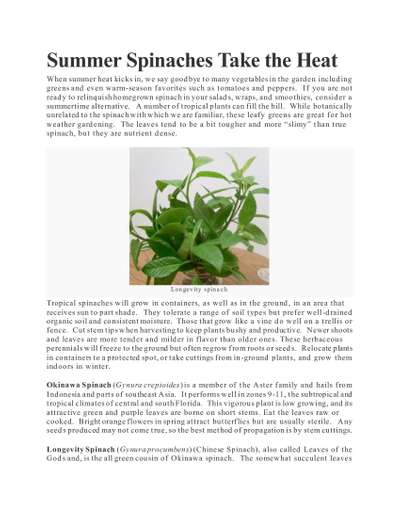
Longevity Spinach (Gynura procumbens) (Chinese Spinach), also called Leaves of the Gods and, is the all green cousin of Okinawa spinach. The somewhat succulent leaves are a bit stronger in flavor and texture. The name “Longevity” could refer to its purported health benefits in lowering blood sugar, inflammation, and cholesterol. Propagate this plant from cuttings like Okinawa spinach.